
Net SIP inflow is calculated by subtracting redemptions from gross SIP investments.

'Ultimately, banks are a channel for people to get some long-term return, and this means banks need to adjust their asset-liability mismatch.' 'Customers also need long-term deposits, say those of three-five years. How would they get them if returns on those deposits do not climb?' 'Otherwise, on fixed deposits, a senior citizen doesn't get anything.'

Smallcap funds topped the net inflow chart for the second consecutive month, as investors poured record Rs 7,973 crore into one of the best-performing MF categories.

BRICS members have expressed 'serious concerns' over the unilateral imposition of trade and finance-related measures, including higher tariffs and non-tariff barriers, stating these actions distort trade and are inconsistent with WTO rules. The grouping also highlighted elevated risks to the global economic outlook due to geopolitical tensions, trade fragmentation, and protectionism.

Finance Minister Nirmala Sitharaman has called upon Indian industry to prioritise not just scale but also resilience, better governance, and deeper technological capabilities to achieve the 'Viksit Bharat' goal by 2047.

Holding-company discounts and losses at key unlisted ventures could weigh on Tata Sons' IPO valuation, though its diversified portfolio may still command a premium.
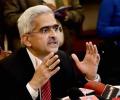
Reserve Bank Governor Shaktikanta Das on Monday said despite the latest headwinds arising from the Jackson Hole summit leading to extreme volatility, our banking system and financial markets are strong enough to withstand such pressures. Taking the markets by surprise, US Fed chair Jerome Powell had told the annual Jackson Hole summit of central bankers and economists last week that he would have to keep raising federal fund rates to tame inflation, which remains the biggest challenge to the world's largest economy. He also warned of the pains that such monetary policy actions would create on growth and jobs.

'Buy on dips, buy on dips and sell on rise.'

Union Communications Minister Jyotiraditya Scindia announced India's ambition to lead the world in 6G mobile technology and become a designer of global technology standards. Speaking at the Global Fintech Fest 2026, Scindia highlighted India's shift from being a technology market to a technology maker, emphasizing progress in 5G rollout, affordable data, and digital infrastructure driving fintech growth, while also stressing the importance of digital security.

Zepto is sharply scaling back Zepto Cafe, closing hundreds of outlets and shrinking its menu as it reworks the business.

Rajesh Exports has refuted allegations of financial irregularities, stating that its reported revenues are accurate and attributing the Securities and Exchange Board of India's (Sebi) interim action to a 'communication gap' between the regulator and the company.

The Indian corporate bond market witnessed a significant surge, with companies raising nearly Rs 16,000 crore in a single day, primarily led by state-owned financial institutions and NBFCs. This strong momentum, driven by improved borrowing conditions and investor confidence, is expected to persist.

Economy passengers are paying more year-on-year while business travellers are paying less.

India's securitisation market achieved its highest-ever first-quarter performance, reaching approximately 60,000 crore, a 22 per cent year-on-year increase, primarily driven by Non-banking financial companies (NBFCs) and a significant surge in gold loan securitisation.

A new report, the Digital Credit and Inclusion Index (DCII) 2026, reveals that Tier-2 cities are spearheading digital credit adoption in India. The study, a collaboration between Pahle India Foundation and Amazon Pay, highlights that salaried women are borrowing more than men and that digital credit is primarily used for consumption, with limited productive use.

The Indian stock market's trajectory this week will be significantly influenced by crude oil prices, global market trends, and the commencement of the corporate earnings season, with IT major TCS set to announce its June-quarter results on July 9.

State-run Punjab National Bank (PNB) is strategically planning to enter the wealth management segment by early 2027 and significantly expand its credit card portfolio, aiming to tap into lucrative markets largely dominated by private-sector banks.

"With the leverage available, I believe the scheme remains reasonably attractive," said P D Singh, India and South Asia Chief Executive Officer, Standard Chartered Bank, regarding the Foreign Currency Non-Resident (Bank) or FCNR (B) deposits.

India's markets regulator Sebi has launched 'Demat 2.0', a pilot project for tokenisation of corporate bonds, enabling atomic settlement through integration with RBI's wholesale CBDC. This new market infrastructure uses Distributed Ledger Technology (DLT) to make bond issuance, trading, and settlement faster and more efficient. India is the first country to issue corporate bonds natively on a distributed ledger with central bank digital currency settlement. Additionally, RBI Governor announced new UPI innovations: 'Tap & Pay' for faster POS transactions and MyUPI, an AI-powered customer support solution.

The Nifty 50 experienced significant volatility during its closing auction session, leading to losses for both long and short retail options traders due to thin liquidity and rapid price swings, particularly in private-sector banks.

The Securities and Exchange Board of India (Sebi) has proposed allowing celebrity endorsements for its regulated entities like AMCs and stock brokers, but only at the brand level, not for specific products or services, as part of a major overhaul of advertisement codes.
India's MSME sector faces a significant formal credit gap of approximately Rs 60 lakh crore, with traditional channels meeting only a fraction of the demand. A new report suggests that a centralised, interoperable digital layer could effectively bridge this gap and enhance productivity across the formal business sector by digitising workflows and enabling cash-flow-based underwriting.

'Regulations give a particular minimum amount of shares to be given in the OFS or IPO -- without which one cannot do the IPO.' 'We got that number on the day of filing of updated DRHP -- sufficient for us to go live with the IPO.'

The Indian government has introduced a 0.4% transaction fee on Unified Payments Interface (UPI) payments exceeding Rs 2,000 for merchants, effective October 15, marking the end of nearly six years of free service. Person-to-person transfers and small-value transactions below Rs 2,000 remain free. The new Merchant Discount Rate (MDR) is capped at Rs 300 for transactions above Rs 75,000, with differentiated rates for essential sectors and investments, and safeguards to prevent costs from being passed to consumers.

The Insurance Regulatory and Development Authority of India (Irdai) has proposed a phased reduction in the expenses of management (EoM) limits for insurers, aiming to lower the overall cost of insurance and enhance returns for policyholders. The proposals also include a new framework for commissions, stricter measures against mis-selling, and mandatory cost audits.

Tata Motors Passenger Vehicles (TMPV) is strategically expanding its international footprint by launching the Nexon, rebranded as Osprey, in South Africa, a move set to significantly boost its export volumes and solidify India's position as a major automotive export hub.

The central government has introduced a 0.4 per cent fee on UPI transactions exceeding Rs 2,000, prompting traders' associations to advocate for cash payments to avoid additional costs on digital payments. This move ends the zero-Merchant Discount Rate (MDR) regime, with traders expressing concerns about operating on tight margins and the potential for increased charges.

PhonePe, at the Global Fintech Fest 2026, unveiled its strategic vision for the next decade, focusing on inclusive digital progress for individuals, households, and businesses across India. The roadmap details innovations in financial inclusion, wealth creation, credit access, and merchant solutions.

India's deposit growth has reached a 15-year high of 17.8 per cent, primarily driven by a surge in foreign currency non-resident (bank), or FCNR(B), deposits. This influx of funds is expected to lead to a softening of corporate loan rates as banks seek to deploy their excess liquidity.

Urban Indian millennials are caught in an algorithmically amplified consumption spiral where social media normalises spending patterns that systematically undermine retirement security.

Union Finance Minister Nirmala Sitharaman expressed strong confidence in India achieving over 10 per cent economic growth, advocating for increased technology adoption and innovation. She urged overcoming scepticism and highlighted technology's transformative role in agriculture and public sector reforms, while also launching a new fund and book at an IIT Madras event.

Morgan Stanley analysts, led by Ridham Desai, predict that the next phase of the Indian market rally will be primarily driven by the April-June quarter (Q1FY27) corporate earnings season and the performance of the monsoon.

The last major business daily to launch in India was Financial Chronicle in April 2008, preceded by Mint on February 1, 2007.

India is set to host five-time world champions Brazil in a historic invitational football friendly in Kolkata. The match, while offering invaluable exposure for the Indian team, has also drawn criticism over its cost and the decision to withdraw from the FIFA ASEAN Cup. The event carries political significance and marks a key step in Brazil's rebuilding process.

Five-time world champions Brazil are set to play India in an invitational friendly at Kolkata's Salt Lake Stadium, marking their first-ever international meeting. The match, while a spectacle for Indian fans, has drawn criticism regarding its cost and impact on Indian football development, with former captain Bhaichung Bhutia questioning its value over long-term investment. For Brazil, it's part of a rebuilding process, while India aims to gain invaluable experience against a top-tier team.

The Finance Ministry has refuted allegations that US pressure influenced the decision to levy a 0.4% Merchant Discount Rate (MDR) on select UPI payments. It clarified that NPCI guidelines prioritise RuPay credit cards on UPI to foster a domestic payment ecosystem and that the MDR introduction aims to create a sustainable revenue model for smaller domestic companies, thereby protecting India's sovereignty in digital payments.

'This rise in foreign exchange reserves was expected given the amount of FCNR(B) flow.'

The Indian government has introduced a 0.4% Merchant Discount Rate (MDR) on UPI person-to-merchant (P2M) transactions exceeding Rs 2,000, effective October 15. This move ends nearly six years of fully free UPI payments, though person-to-person (P2P) transfers and small P2M payments remain free. The charges aim to bolster investment in UPI infrastructure, with specific exemptions and caps for essential sectors.

Coforge Chairman O P Bhatt has abruptly resigned from the IT firm after an internal audit raised concerns over the handling and presentation of a 'board evaluation report' to the board, with the company asserting the move will not impact its financial or operational performance.

BAFs seek to offer a smoother experience across market cycles, not the full upside of a bull market.
